
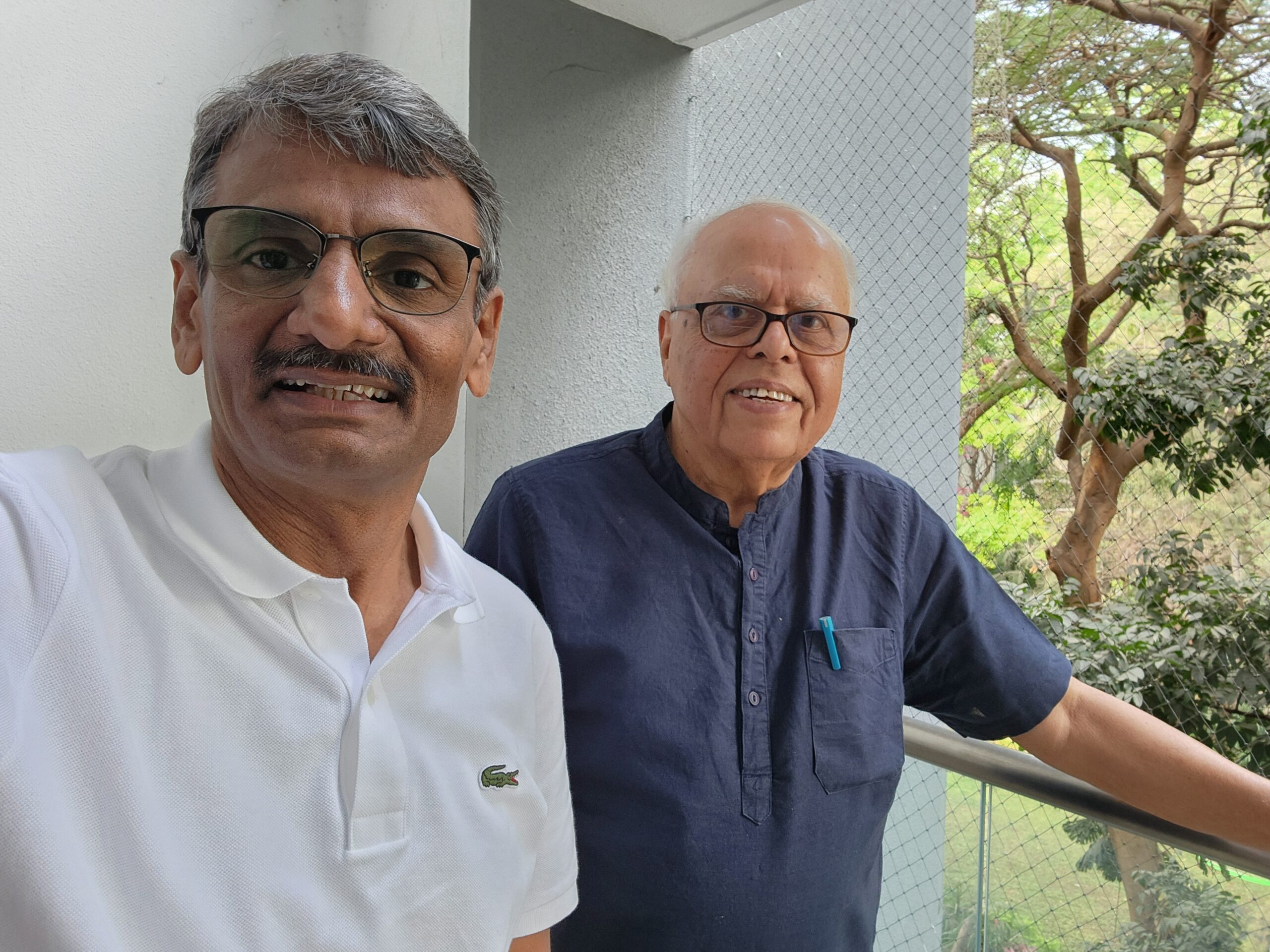
Dr. Avinash Kulkarni (ADK) is an IIT alumnus and a PhD-trained engineer who has spent almost five decades building deep-technology businesses in India. After completing his doctoral work in the United States and earning multiple patents, he returned to India in the late 1970s to set up manufacturing in advanced light sources.
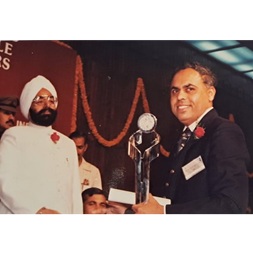
He is the Chairman of Litex Electricals (P) Ltd & Arklite Speciality Lamps (P) Ltd, with work spanning halogen, infrared, ultraviolet, and laser-based applications across industrial heating, aerospace, air and water treatment, and defense systems. His career reflects repeated cycles of building, disruption, and reinvention — driven by engineering depth, disciplined execution, and long-term thinking. He is the recipient of the 1st National Award for Outstanding Entrepreneurship from the President of India, in March 1985 at Vigyan Bhavan, New Delhi. He also received the Distinguished Alumnus Citation of IIT Bombay from the hands of Dr Raja Ramanna, in the presence of President Zail Singh, the convocation held in September 1983.
Interview with Dr. Kulkarni
RK: I want to begin with your journey. Your career feels like a series of long climbs — with ups, downs, and reinventions. Could you walk us through how it all began?
ADK: After graduating from IIT in 1963, a director of Dastur Company — who happened to be an external examiner — offered me a position. I accepted without much hesitation and went to Calcutta for the job. I spent about two years with the steel consultants there. Even in the 1960s, IIT graduates were highly motivated to go to America. I applied to Berkeley, the University of Pennsylvania — which is an Ivy League institution — and McMaster University in Canada. I got admission along with a research fellowship at the University of Pennsylvania in the fall of 1965.
About a year later, they gave me an option: I could do a Master’s degree first, or I could skip the Master’s and proceed directly toward a PhD. I chose to skip the Master’s and continue directly with the PhD. I joined in fall 1965 and completed my PhD by December 1968.
My first position ended unexpectedly when a downturn in commodity prices led to the closure of the laboratory. I later joined Westinghouse as an extractive metallurgist, working on tungsten extraction. The main project was to develop a process for the extraction of tungsten from ore. While working there, I started looking around at other problems and opportunities. I became interested in lamps. I developed a very simple and elegant way of manufacturing halogen lamps. That work turned out to be very successful. I filed several patents.
At that time, lamp production was dominated by large multinational companies. And the process I developed was something that could be done in India through small-scale industry. It was technically sound, economically viable, and could be scaled. By around 1974, the idea was already well established. However, I spent the next five years thinking very deeply about how to execute it properly.
In November–December 1979, I returned to India to set up the industry. At that time, as a PhD graduate from a good US university, I was among the top 5–10% of scientists in terms of experience and compensation. I was very well paid. But I felt strongly that if I didn’t try building something in India, I would never forgive myself. The journey was very rough. Customs procedures were horrible. Regulatory systems were extremely difficult to deal with. But when we started making lamp, there was no other company apart from Philips making similar products. Customers lined up. There was no need for marketing. We never really learned marketing because the quality spoke for itself.
Later, we expanded into infrared lamps. We also started manufacturing photocopier lamps — something nobody was doing outside Japan. All photocopier companies operating in India at that time sourced from Japan. By 1995, photocopier lamps were our highest-selling product. But by 2005, the market completely collapsed due to digital copiers. This was a classic rise-and-fall cycle — from around 1985 to 2005. The market went to zero. Similarly, halogen lamps became commoditised. These lamps started selling in retail for very low prices — sometimes 50 cents — which made it impossible to manufacture them profitably. By around 2010, we had to move on.
One notable product that we developed was high-energy flash lamps for the Raja Ramanna Centre for Advanced Technology in Indore. These lamps discharge about 1000 joules in a microsecond. Technically, this was a major success. Commercially, it wasn’t very attractive because volumes were small — maybe 50 to 100 lamps a year — and each lamp cost about ₹40,000. Maintaining a full manufacturing setup for such low volumes was difficult. But the technical success gave us tremendous confidence. It showed that we could do anything.
That capability led us to missile guidance lamps. These are intense infrared sources mounted on missiles to help determine position and guide them during day and night operations. We supplied tens of thousands of these lamps. In 1987, we promoted a second company called LITEL IR Systems (P) Ltd, focused entirely on infrared heating. Infrared heating is fundamentally different from conduction and convection. Radiant heating was not common in India at that time. For example, if you need to cure a coating at 200°C using a furnace, it might take hours. But with a bank of infrared lamps — say a 30-foot-long array — you can cure it in one minute. This is the power of infrared radiation. This technology is essential for aerospace applications, including simulating re-entry heating conditions, where conduction and convection simply cannot replicate the physical environment.
Later, in 1996, we promoted a third company called Arklite Speciality lamps (P) Ltd. Over time, however, the entire traditional lamp industry went through massive disruption. Metal halide lamps, sodium lamps, mercury lamps — everything was replaced by LEDs. At one point, we were manufacturing 50,000 metal halide lamps per month. By around 2010, that market had completely disappeared.
Fortunately, we had already started developing ultraviolet lamps made of quartz. Quartz softens at around 1900°C, while ordinary glass softens at about 700°C. Quartz allows you to build lamps that can withstand extreme thermal and radiation conditions. This technology is much more complex and cannot be replicated with soft glass. It is premium technology, required for industrial and commercial applications where reliability and performance are critical.
That led us into air and water disinfection. In air-conditioning systems, most buildings recirculate 90% of the air. Moisture condenses on cooling coils, leading to mould and mildew growth. If you install UV lamps to illuminate the cooling coils, UV radiation destroys all biological growth. The coils remain clean, heat transfer efficiency improves, energy consumption reduces, and pathogens are eliminated from the air. This saves significant energy — sometimes up to 15% — in large air-conditioned buildings.
During COVID, this became a boom sector. Demand for air disinfection rose dramatically. Our largest installations include 43 underground metro stations in Delhi (Phase 3). And by now we have done UV installations in more than 90 underground metro stations. In many cases, American consultants insisted on UV-based air quality systems. Recently, we completed a wastewater treatment plant in Qatar with a capacity of 40 million litres per day.
Going forward, water treatment is becoming our largest focus area. Air treatment continues, and lamp manufacturing remains a core competence.
RK: That’s an extraordinary journey. Let’s now move to the second part of our conversation. I’d like to seek your guidance — drawing from your life and work — on the people, practices, and principles that have helped you stay strong and continue this long journey. This includes your role models, the way you approach productivity and time, how you take care of your health, the hobbies or routines that keep you grounded, and the values that have sustained you through change. How do you look at all of this, in retrospect?”
ADK: When I look back, I realise that a lot of what sustained me came very early in life, from my parents. My mother was an extraordinarily hardworking, intelligent 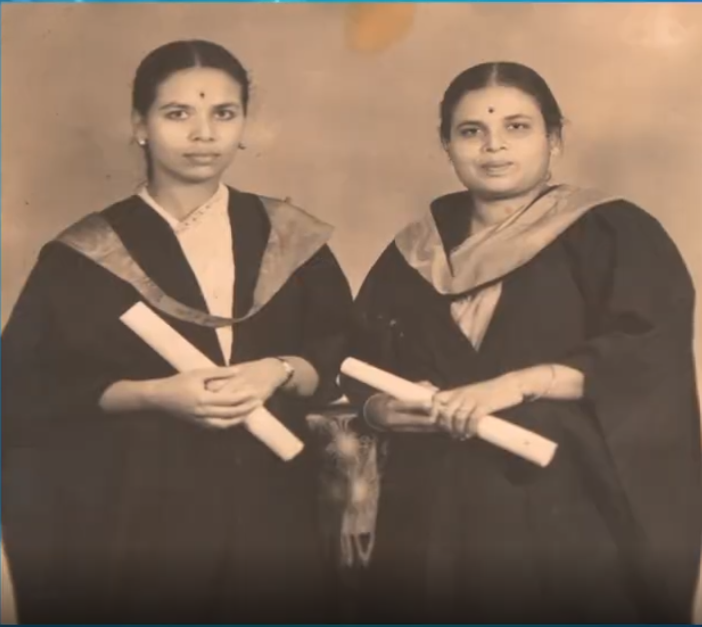 and determined person. Nothing seemed to disturb her. When our parents got married, my mother was a high school graduate, and as my elder sister started going to college, my mother started reading her books. Both studied together and passed the MA exams in 1958. All this she did as a middle-class housewife with 8 children! Later, she started teaching in a high school. She managed the family with immense patience and discipline.
My father was an orphan and spent several years in an orphanage in Pune and left for Gwalior after SSC and eventually became Director of Education in Madhya Pradesh. That kind of journey does not happen often, especially in those days. These two were my real role models.
From them came a deep sense of optimism — the belief that if you keep working sincerely, things will eventually work out. That optimism stayed with me through every phase of my career.
During my IIT days, finances were extremely tight. We were eight siblings. One scholarship was not enough to survive, so I had to maintain multiple scholarships. To retain them, I had to stay within the top ten percent in IIT Bombay consistently. If I slipped, I would lose support. That taught me discipline, responsibility, and self-reliance very early. There was no safety net.
Later in life, when I had a comfortable career in the US and multiple patents to my name, people could not understand why I chose to return to India. But I felt strongly that I owed something to my country. Patriotism, creativity, and the desire to build something meaningful mattered to me. I always told myself: even if I failed, I could come back — but if I didn’t try, I would never forgive myself.
Even if I failed, I could come back — but if I didn’t try, I would never forgive myself.
As far as productivity is concerned, I don’t think I ever struggled with procrastination. If a task came up — whether it was a bill, paperwork, or a decision — I preferred to finish it immediately. I’ve noticed that people often procrastinate when they dislike a task or find it complex. My approach has been simple: if I don’t enjoy a particular kind of work and someone else is better suited for it, I delegate. Delegation is essential if you want to stay focused on what truly matters.
I’ve also been fortunate to work largely on things that interested me. When your work aligns with your curiosity, burnout doesn’t really arise. I never experienced burnout in the way people often describe it. I enjoyed the work too much.
Health and routine have played a very important role. Walking has been a constant — even today, I walk around 8000 steps daily. Yoga, pranayama, and meditation gradually became part of my life. Heartfulness meditation, in particular, has been deeply grounding. These practices help maintain balance, clarity, and energy over long periods.
At this stage of life, I am Chairman of the companies and not involved in day-to-day operations. That gives me the freedom to focus on what I enjoy — thinking, mentoring, exploring ideas, and contributing where I can add the most value. Strong family support has also been crucial throughout this journey.
Looking back, a few things stand out clearly: optimism, discipline, delegation, attention to health, and a sense of responsibility beyond oneself. These are not things I consciously planned — they simply evolved over time. But together, they made it possible to keep going, adapt, and continue the journey without losing direction.
🛠️ A SIMPLE LESSON IN MENTAL ECONOMY
Author’s note:
When I asked Dr. Kulkarni when I could visit him for the interview, he didn’t reply with a casual “anytime” or leave it open-ended. Instead, he sent me a message that demonstrates how a clockwork-precision routine he has.
On Mondays and Fridays, I go to work. On Tuesdays and Thursdays, I play bridge at the Deccan Gymkhana Club in the afternoon. On the remaining days, just call me and come anytime between 2 and 6 pm.
What stayed with me was not just the discipline, but the economy behind it. By deciding once—and deciding clearly—he had eliminated a whole category of small, recurring decisions.
Over the course of our conversations, I noticed this pattern everywhere. He visited relatives for lunch at familiar places on familiar days. His music teacher had been coming regularly for decades. Even the people who helped run his household had been with him for thirty years or more. Nothing in his life seemed to require daily negotiation. By preserving continuity in the ordinary, he conserves attention for the essential.
The Karmyogi journey continues…
Each Karmyogi has a unique story, yet they all share one common trait: they have mastered time with purpose, calm, and consistency. Explore the complete collection of interviews and discover the ideas, habits, and philosophies that shaped their remarkable lives. Explore the Karmyogi Series