

You know exactly what you should do. You even want to do it. Yet somehow you don’t. Instead, you check your phone, rearrange your desk, make another cup of tea, or convince yourself you’ll start tomorrow. Why? That is procrastination. But why does it happen?
I have had my own struggles with personal productivity over the years. Interestingly, procrastination was never one of my biggest challenges. Because of that, I never really understood what was going on in the mind of someone who procrastinated regularly. From the outside, it seemed simple enough. I assumed it was mostly a matter of low enthusiasm, poor motivation, or plain laziness.
That explanation made sense—until it didn’t.
I would see intelligent, capable, and hardworking people postponing things they genuinely wanted to do: starting a project, preparing for an exam, or reading a book. These weren’t lazy people. Clearly, something else was happening.
That question stayed with me until I came across an explanation that completely changed the way I looked at procrastination. It came from Tim Urban’s excellent book What’s Our Problem?
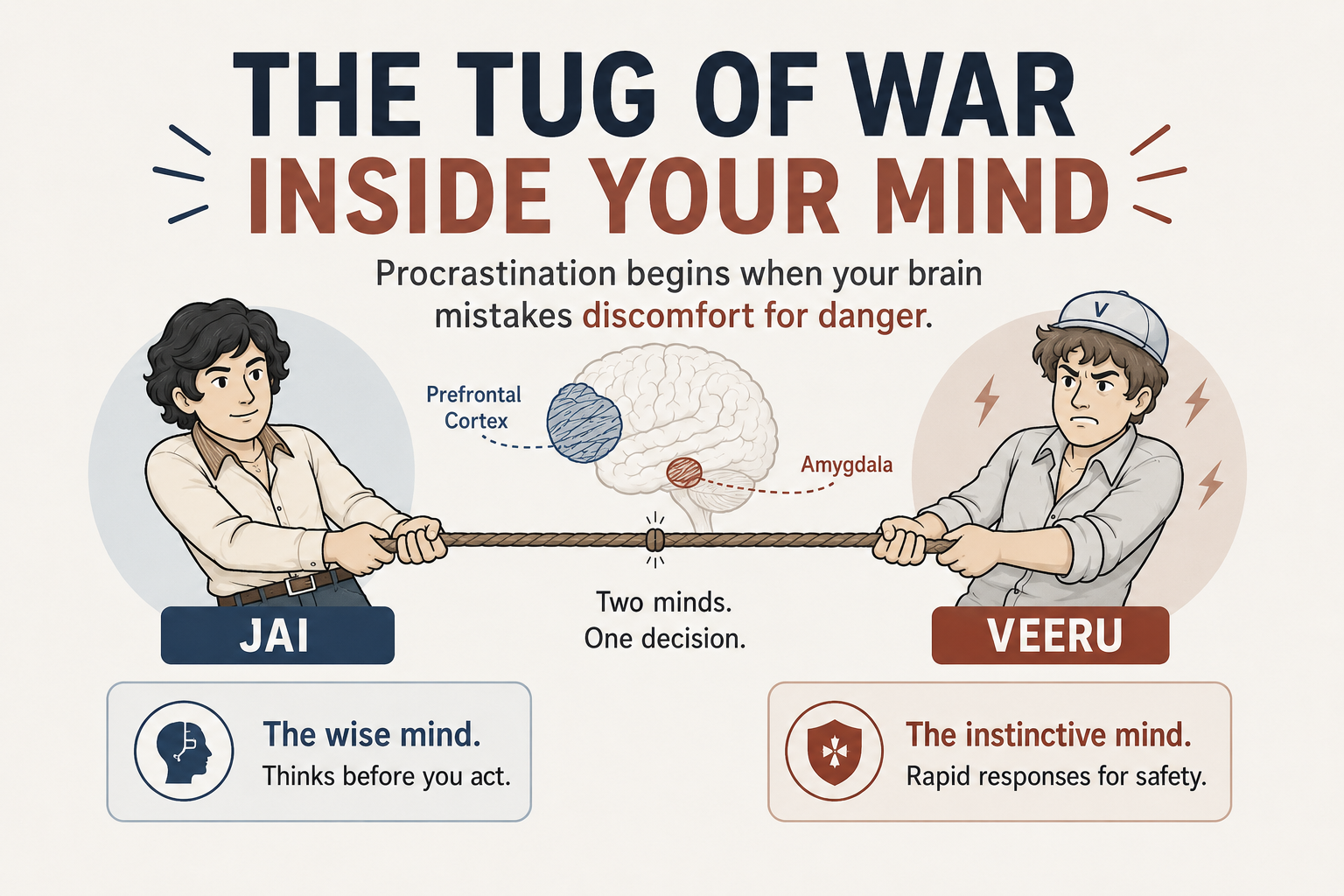
Tim explains how two parts of our brain are often engaged in a quiet struggle for control.
One is the Prefrontal Cortex, responsible for planning, judgment, learning from experience, and long-term thinking.
The other is the Amygdala, an ancient survival system designed to detect threats and keep us safe.
What really struck me was that Tim didn’t present this as a model of just procrastination. He described it as a much broader tug of war that also shows up in addiction, impulsive behaviour, emotional reactions and many other aspects of our lives.
That was my ‘aha’ moment. While procrastination had never been my biggest challenge, I immediately recognised this tug of war in other situations in my own life. If it could explain my own behaviour, I could suddenly appreciate how powerful it must be for someone who struggles with procrastination every day.
That idea stayed with me.
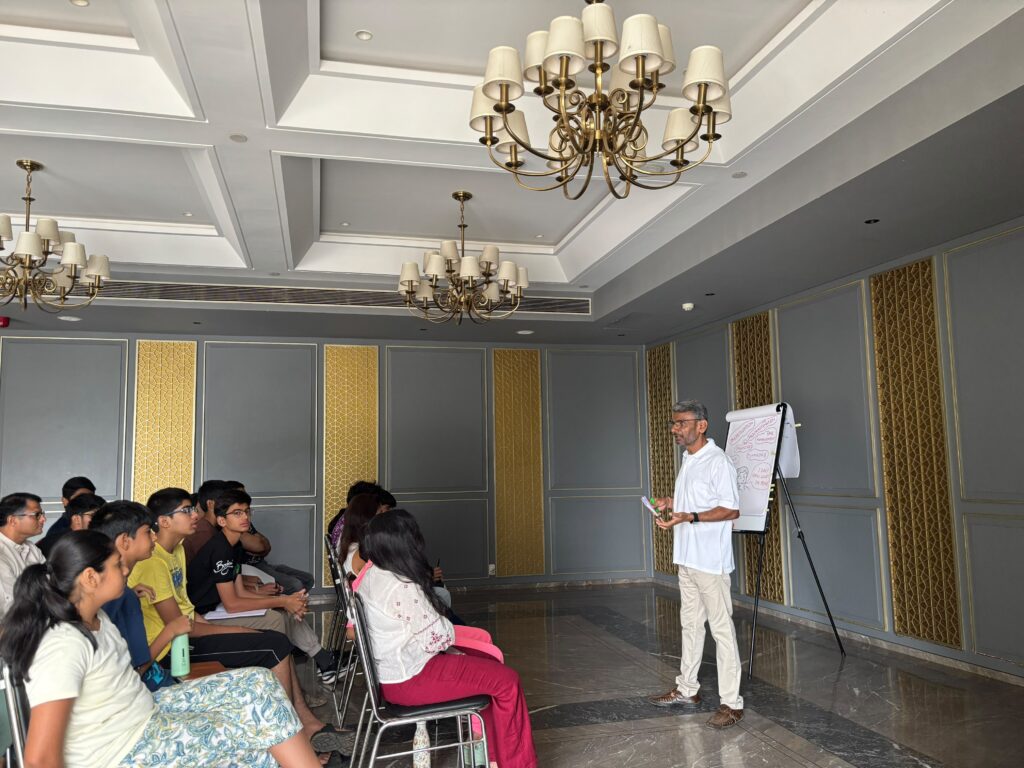
Later, while preparing my first Time Management and Personal Productivity workshop for teenagers, I wanted a simple way to explain it. That’s when Jai and Veeru were born.
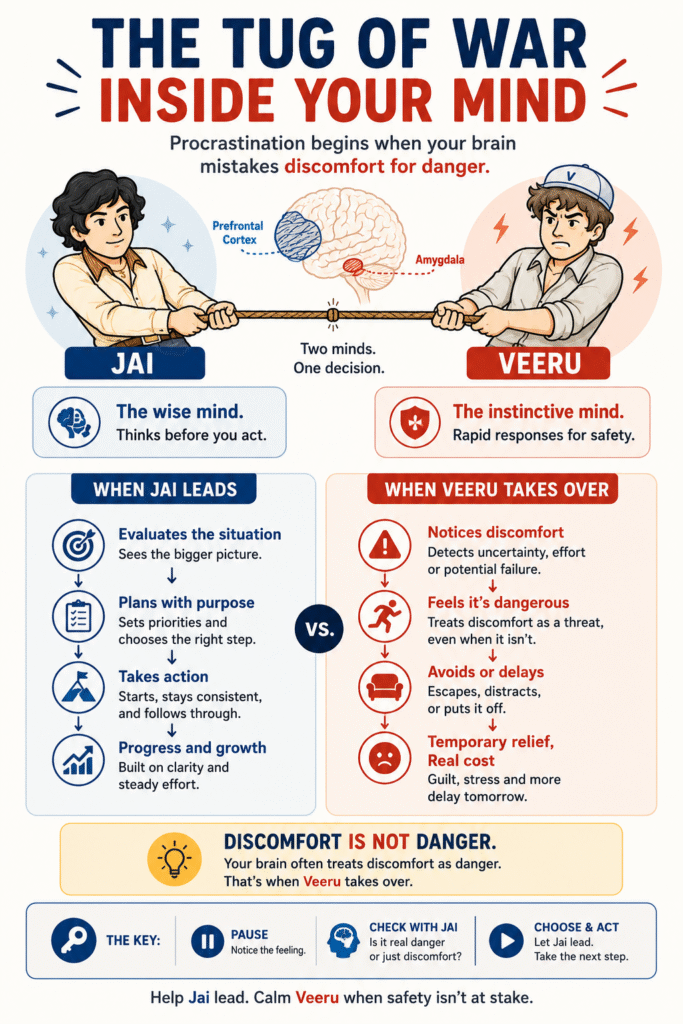
They are actually very good friends. They live together peacefully most of the time and usually make a great team. But every now and then, they disagree. And when they do, a tug of war begins. Jai represents the Prefrontal Cortex and Veeru the Amygdala!
One thing is important to remember. Veeru is not the villain.
For most of human history, he helped our ancestors survive. Without him, they wouldn’t have escaped predators or responded quickly to danger. The problem is that the world has changed much faster than our brains have.
Today, the threats we face are rarely life-threatening. Instead, we face uncertainty, criticism, fear of failure, difficult conversations, exams, deadlines, and mentally demanding work. These situations are uncomfortable. But they are usually not dangerous.
Unfortunately, Veeru doesn’t always know the difference. And that’s where procrastination begins.
Procrastination begins when Veeru mistakes discomfort for danger.
When that happens, avoiding the task feels like the safest option. We postpone it, distract ourselves with something easier, and experience immediate relief. Unfortunately, that relief is temporary. The task is still waiting for us—often accompanied by more stress and guilt than before.
Understanding the problem was one thing. Finding practical ways to overcome it was another. As I searched for solutions, it became clear that people procrastinate for very different reasons. That insight eventually led me to develop six procrastination personas. You can read about them here.
Yet beneath every solution lies one common principle: support Jai. Veeru doesn’t need encouragement. He is always alert and ready to take charge whenever he senses discomfort. In fact, he often takes over before Jai even gets a chance to speak. Our job is to give Jai a fighting chance.
The next time you catch yourself postponing something important, resist the temptation to label yourself as lazy. Instead, pause and ask yourself:
“Is Veeru mistaking discomfort for danger again?”
Or, if you prefer the metaphor:
Who’s winning the tug of war right now—Jai or Veeru?
That one question changes the conversation.
Instead of fighting yourself, you begin to understand yourself. And that awareness gives Jai another opportunity to lead. Because, more often than we realise,
Discomfort is not danger.
Subscribe to my newsletter, to get tips like this and more, directly in your inbox!
(Originally published in Times of India on July dd, 2026)