
Tsundoku (Japanese: 積ん読) is acquiring reading materials but letting them pile up in one’s home without reading them.Source: Wikipedia
Does your bookshelf have more books waiting to be read than books you’ve actually finished? Do you keep buying books on recommendations, start reading a few, and somehow never get around to finishing most of them?
If so, you are not alone. You might even be practising Tsundoku!
With so many interesting books competing for our attention, it is easy to lose track of what we are reading, what we intend to read, and what we have yet to buy. And when you think about your reading progress, it can feel rather chaotic.
The pace of reading varies from person to person and also depends on how busy we are with our other commitments. Establishing a reading ritual (as I discussed in my earlier post) is essential. But equally important is managing your reading list.
Here is a simple four-step approach that can help:
1. Maintain a Wish List
Let’s say someone recommends a book. You don’t need to buy it immediately, nor do you need to worry about forgetting the recommendation. Simply add it to your wish list.
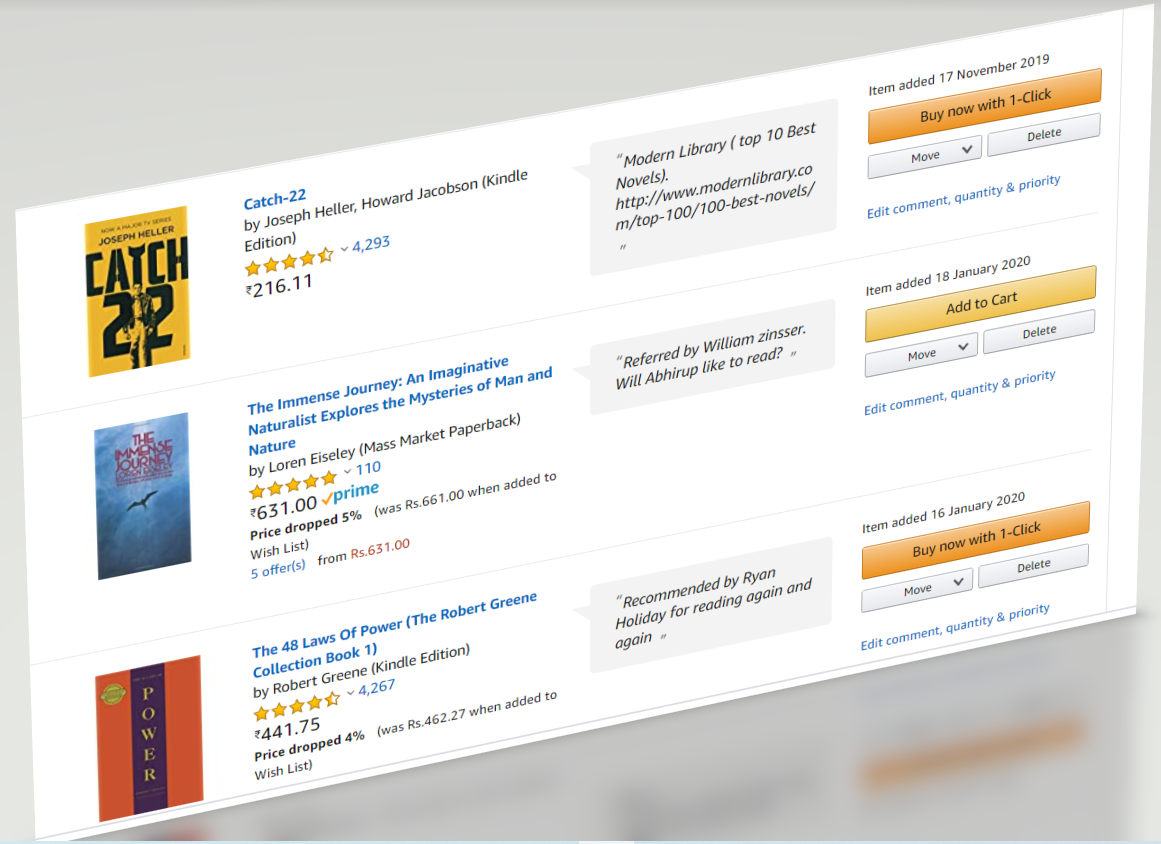
Amazon’s wish list feature is particularly useful for this. You can create multiple lists organised by themes such as self-development, technology, management, and so on.
One small but important suggestion: add a comment explaining why you added the book in the first place. Otherwise, when you revisit the list months later, you may not remember what caught your attention!
See the featured image for a glimpse of my own wish list.
2. Make Sure the Book Is Right for You
Before buying a book, do a little homework. Read reviews, check Goodreads, and, if available, download a free sample of the e-book. Read a few pages to see whether the writing style, content, and level of detail appeal to you.
This is one of the advantages of e-books: you can sample a book before committing to it.
So, you’ve found a book you like. Great! But hold on. You still don’t need to buy it just yet.
3. Maintain a Reading Plan
Keep an up-to-date list of all the books you own and haven’t read. Arrange them in the order in which you intend to read them. This gives you a clear idea of what is next rather than leaving you wondering which book to pick up every time you finish one.
Once you finish a book, record the month and year of completion in the list and move on to the next one. I describe a more effective and elaborate scheme of tracking your reading using Goodreads here.
4. Buy Books When You Need Them
Now comes the interesting part!
As you approach the end of a book in your reading plan, revisit your wish list. Pick one or two books that deserve priority and buy them.
This way, you are buying books with an intention to read them, rather than simply because they caught your eye or someone recommended them.
Remember, the time available for reading is already limited and precious. Be discerning about the books you choose to spend that time on.
A little organisation can go a long way. It helps you make better reading choices, keeps your reading on track, and, most importantly, increases the likelihood of finishing the books you start.
Happy Reading!