

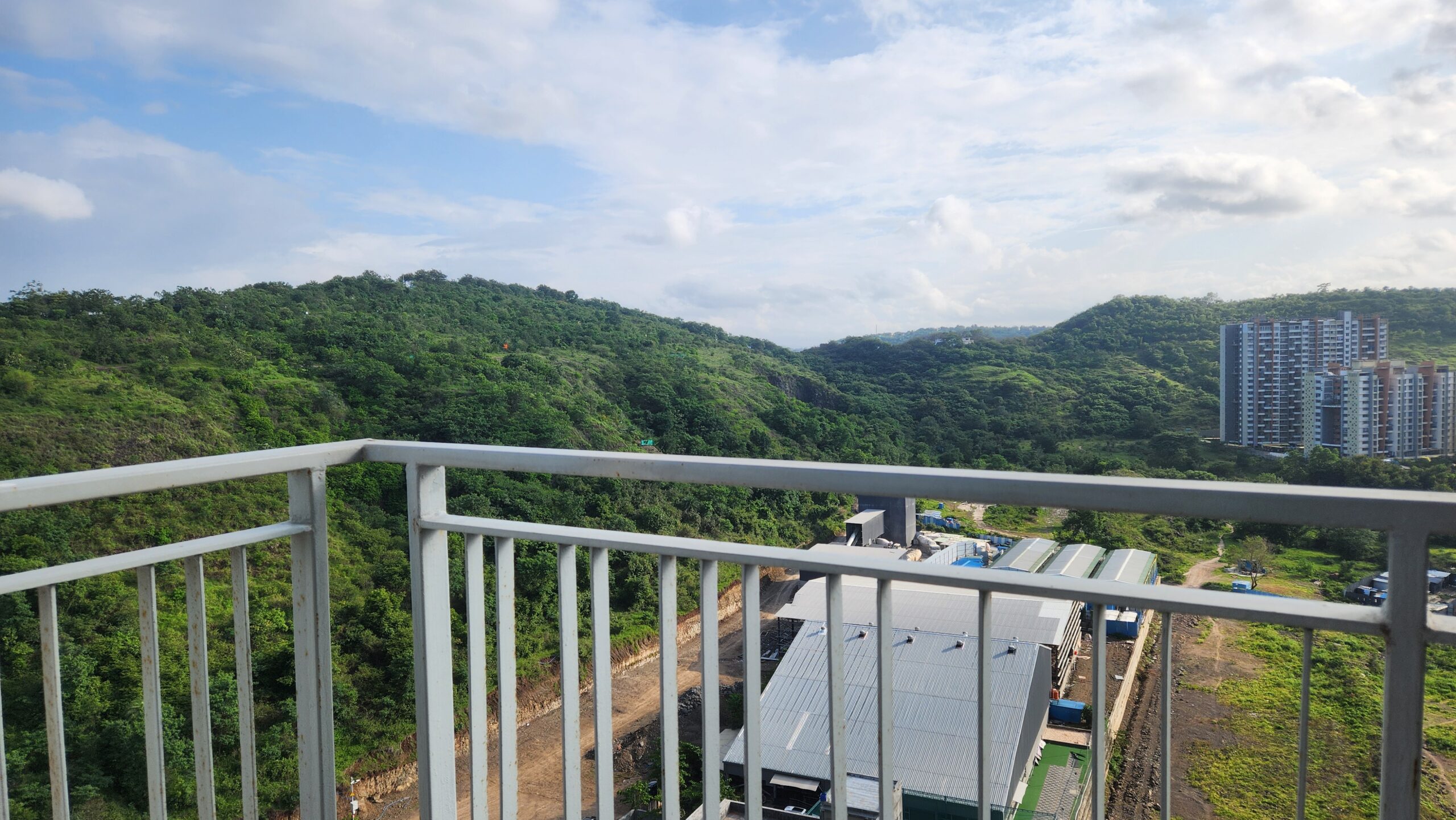
When I stand on the balcony of my flat on the 17th floor, with just a metal grill between me and about 150 feet of empty space below, I still feel safe. I wonder, if there were no grill, would I be comfortable standing there? Probably not. The grill doesn’t change where I am standing. I am not using it, yet I can stand there quite comfortably because of the grill.
Similarly, when you walk on the floor, you hardly need any extra space to walk on. But imagine you have only that much space on a ridge; now you get nervous.
The mere presence of the grill or that extra space around us changes how we feel. Let’s call that psychological support a buffer. A buffer doesn’t have to be used to be useful, but its presence gives you comfort and confidence.
Think about getting ready for an important event. If you have plenty of time, you can get ready calmly. You may even enjoy the process. But if you have planned every minute right up to the time you need to leave, you are racing against the clock. You may still reach the event on time. But the journey there has been stressful. You would curse every red signal that is delaying you further, or get irritated even by an innocent comment from your spouse or friend travelling along with you. And if something unexpected happens and you are late, the consequences can be even worse.
Now, this is a no-brainer. Everyone would agree that, yes, one should have a buffer. But here’s the problem. We don’t have infinite capacity. We have a fixed number of hours in a day, and usually more things we want to do than we can comfortably fit into them. So we optimize. This is where the problem gets interesting
Let’s see something I faced today, at the time of writing this. Every Saturday, our group goes for a mini-trek on a nearby hill. The group starts at 7 AM. They don’t wait beyond that; whoever is there starts the trek.
But before I go, I want to do my usual morning chores, do a bit of stretching, have my oats and milk, and then go. So, I get up early on Saturday. Today also, I woke up on time, but as I moved through my chores and breakfast, it was already time to leave and I was yet to have my milk. I would have to skip my morning milk to make it to the starting point at 7. I chose to have my milk, leave a little later, and catch up with the group on the trail. I used my buffer to not miss my milk, as I would like to have good strength before I start. I could do that because I wasn’t asking anyone else to wait for me. And in this particular situation, I considered what I gained worth the small risk and inconvenience.
That’s a trade-off. And I think we make similar trade-offs with our time all the time. We are often confronted with this question: Where can I afford to consume the buffer?
The danger is consuming it everywhere
The problem starts when we treat every bit of unused time as an opportunity to fit something else in. A 30-minute gap appears in the calendar. I can fit a call here. A journey takes 30 minutes. I can leave exactly 30 minutes before the appointment. A meeting is scheduled to end at 11. The next one can start at 11.
Sounds logical!
But now there is no room for reality. The meeting runs five minutes over. Traffic is worse than expected. The task takes longer. And suddenly, you are in the red. We have optimized our time but in turn made the system fragile.
In the familiar story of the tortoise and the hare, the hare thought he had such a big lead that he could afford a nap. He had a buffer. He spent it. The problem wasn’t taking the nap. It was misjudging how much buffer he had. We do the same with time. The trick is knowing how much buffer we can afford to spend.
A buffer is not necessarily wasted time
This is where I think our productivity mindset sometimes misleads us. We tend to look at unused capacity and ask:
“What else can I do with it?”
But before asking that question, we should ask:
“What happens if I need it?”
That unused 15 minutes may never be needed. The meeting may finish on time. The traffic may be light. Nothing unexpected may happen. But the buffer has still served a purpose. It has given you room to absorb variation—and, in turn, the freedom to experience those moments with a relaxed mind.
And there is another way to make a buffer less frustrating. Hedge it!
If I have an important event and want to arrive early, I might carry my headphones and listen to an audiobook if I have to wait. I’m still protecting the buffer. I’m simply giving myself something useful to do if I don’t need it.
Punctuality is good. We should show up at the right time when we are expected to. And having enough buffer makes that much more reliably possible without stress.
But we don’t always have the luxury of keeping a large buffer. Sometimes, the stakes are low enough that consuming some of it is perfectly reasonable. When everything goes as planned, a buffer may look like wasted time. But when something goes wrong, you are glad you had it. And sometimes, if we know there is a good chance we won’t need the buffer, we can hedge it by having something useful or simply enjoyable to do.
Subscribe to my newsletter, to get tips like this and more, directly in your inbox!